

Original article written by Dan Sullivan for Lancaster Farming posted 23 January 2026

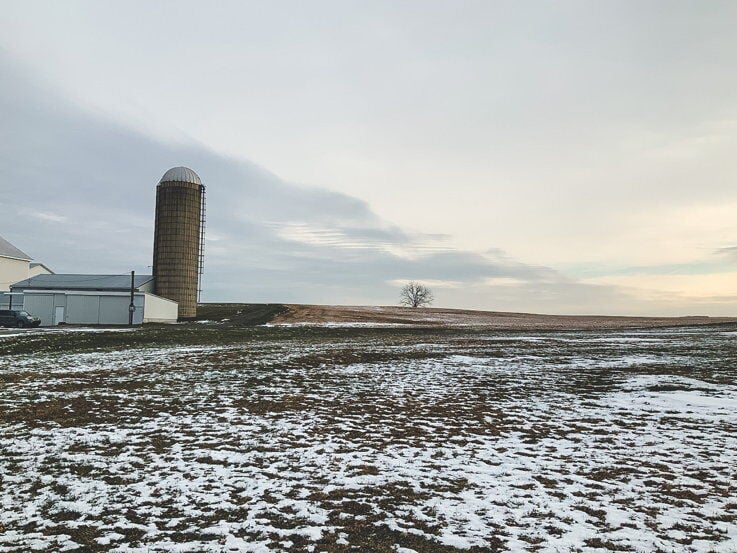
Two Cumberland County, Pa., farms along the I-81 corridor were recently preserved thanks to earmarked funds provided through a Silver Spring Township voter referendum. Provided by Lancaster Farmland Trust.
Mervin Raudabaugh received offers of more than $15 million from data center developers for his two contiguous Cumberland County farms. Thanks to a farmland preservation program dedicating taxpayer dollars toward protecting agricultural resources, he didn’t take the bait. He settled for about $7,200 per acre to preserve the 261 acres along with his family’s legacy and memories. “My mother died in my arms up there,” said Raudabaugh, 86, referring to the barn where the family milked cows.
Through a voter-approved referendum passed in 2013, a portion of Silver Spring Township’s earned income tax is dedicated exclusively to conserving farmland, forests and open space. The cost to taxpayers averages about $120 per household annually. The township enlisted Lancaster Farmland Trust to preserve the Raudabaugh properties, compensating the nonprofit for all administrative tasks and to hold and enforce the easement. One of the recently preserved farms is adjacent to an Appalachian Trail parcel owned by the U.S. Department of the Interior.
“Silver Spring Township, while they are funding this, they ultimately are entrusting Lancaster Farmland Trust, or other land trusts that they’re working with. We are the ultimate holder of the easement,” said Jeb Musser, vice president of land protection at Lancaster Farmland Trust.
Some municipalities such as West Hempfield Township in Lancaster County have dedicated funds for preserving farms, but they come from sources such as transferable development rights, which are essentially impact fees developers pay for zoning density variances. But west of Chester County, only four townships across Pennsylvania have land preservation funds provided by citizens through voter referendum.
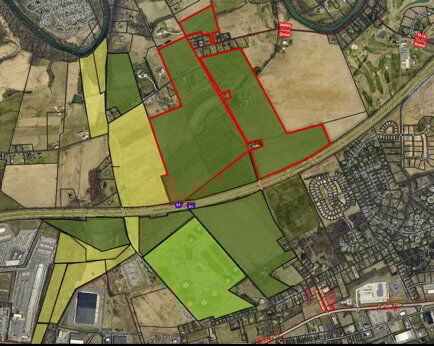
Red outline highlights two Cumberland County, Pa., farms recently preserved by Silver Spring Township. Provided by Silver Spring Township.
“We’ve preserved 21 other properties, farms and woodlands,” said Laura Brown, vice chair of the Silver Spring board of supervisors. “But these two are really a keystone for us.” Brown said the township would never have been able to compensate Raudabaugh adequately without the taxpayer sanctioned and funded Land Preservation Fund. With that fund, the township was able to offer Raudabaugh the full appraised easement value for each acre, plus an additional $2,500-per-acre incentive payment. Still, she said, preserving the farms required a landowner who was willing to take one-eighth of what the tech companies were offering.
And they were relentless, said Raudabaugh, whose wife died four years ago. “These people have hounded the living daylights out of me,” he said. Raudabaugh milked cows for 51 years, raised beef cattle until 2022 and plans to continue growing corn and soybeans at least through the next growing season. “I was born in Silver Spring Township, and that farm now has two big warehouses, and they tore the house where I was born down and tore down the barn,” he said. While the farm was officially preserved Dec. 30, Raudabaugh is still receiving calls from real estate agents anxious to broker a lucrative deal.
Option for Other Townships
The Raudabaugh parcels are the fifth and sixth properties Silver Spring Township has preserved in 2025 through the taxpayer-funded program. Four additional farms are in line for preservation by the end of this year. While 100% of the money to preserve the farm comes from the township, other municipalities that might choose to emulate the model could exercise options to leverage additional funds, Musser said.
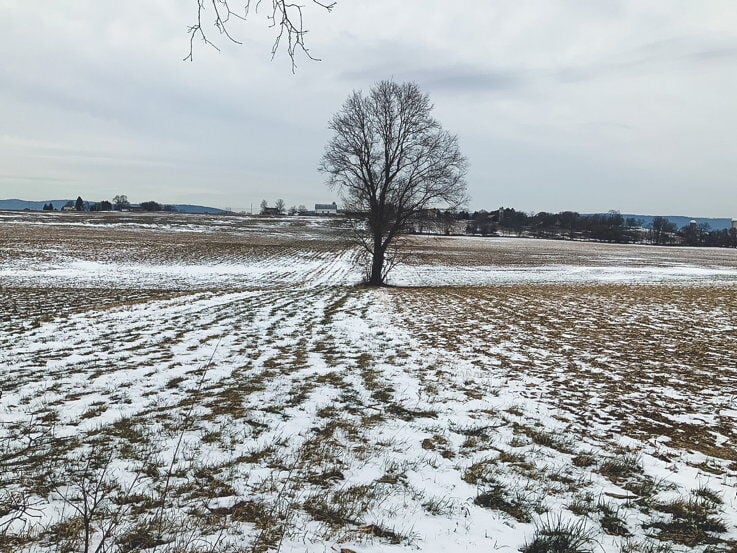
Mervin Raudabaugh turned down $60,000 per acre offered by data center developers for his Cumberland County, Pa., farms, opting instead to preserve them. Provided by Lancaster Farmland Trust.
“They could use a portion of it to be matched with county dollars or with LFT’s private dollars, for example, in Lancaster County,” he said, adding that his organization only uses donor dollars to preserve farms in that county. And while Lancaster Farmland Trust typically offers about 30% of appraised value, Musser said, a public fund could help sweeten the pot. For example, he said, if West Lampeter Township decided to pass a similar referendum, it could offer more money from the earned income tax dollars. Farmers who have been on the fence about preserving their farms might be motivated, he said. “It gives some more flexibility,” Musser said. “And you can even offer incentive payments and those sorts of things to, sort of, preserve some of those really high-quality, high-scoring farms.”