
Article republished with permission from
Willistown Conservation Trust’s The Sycamore Fall 2025
by Mike Cranney, Director of Stewardship – photos by Mike Cranney
In 2024, Willistown Conservation Trust (WCT) set out to restore roughly 25 acres of fallow farm fields to native meadow and grassland at our newest property – Kestrel Hill Preserve. In June of that year, an 11-acre (upper) field adjacent to Providence Road was seeded with three native grasses and 24 different native wildflowers, while a 14-acre (lower) field next to Plumsock Road was seeded with four native grasses. These different seed mixes diversify the habitat, allowing the entire area to support a broader range of birds and pollinators more quickly, while simplifying some management strategies.
In just one year the changes at Kestrel Hill are remarkable. While native meadow species like the ones that were seeded can take multiple years grow, we saw positive results almost right away. By the end of the first summer, the upper field was painted gold with Black-eyed Susan (Rudbeckia hirta), while smaller germinating buds of numerous other species signaled an even more productive second year. Similarly, we noticed abundant germination of grass species in the lower field, while the cover crop of annual rye held the soil in place through the first winter.
Things really took off in 2025. After a wet spring, the newly seeded grass filled the lower field almost entirely, with some wildflowers already beginning to creep in as well from the adjacent meadows. By early summer, the upper field glowed even more brilliantly than the year before. If you drove by the Preserve on Providence Road this past May or June, you may have noticed the stunning sunny display of lanceleaf coreopsis (Coreopsis lanceolata) blanketing the top of the hill. Foxglove beardtongue (Penstemon digitalis) and purple coneflower (Echinacea purpurea) could also be found sprinkled throughout, adding spots of color and more blooms for the insects to enjoy. When the coreopsis flowers began to fade, an abundance of false sunflowers (Heliopsis helianthoides) filled the field with even more yellows that maintained through the summer. As the season faded into fall, the warm-season grasses in both fields began really showing off. Big bluestem (Andropogon gerardii), Virginia wildrye (Elymus virginicus), and Indiangrass (Sorghastrum nutans) turned both the upper and lower fields beautiful shades of golden brown, yellow and orange. Even the goldenrods and asters are beginning to pop up, which suggests that there may be an eruption of color next fall.
This early success is encouraging and beautiful to see, but meadow restoration does require a little patience. Unlike these few key examples, many species will spend the first few seasons establishing their root systems before growing, making this time especially critical for management. Over the next couple of years, both areas will require regular mowing to prevent undesirable plants from invading, while allowing the native plants to establish and spread. Stewardship staff and volunteers are also regularly scouting the fields for particularly damaging invasive species, such as Canada thistle, so that they can be promptly removed before they take over. During this time, a greater diversity of species will begin filling in, shaping the meadow into an even more striking and beneficial habitat.
The impacts of this restoration are already being observed. This summer, WCT’s Stewardship Intern Ian Salisbury completed a study focused on documenting the diverse species that call Kestrel Hill Preserve home. Using the meadow as his template, he aimed to record the variety of butterflies that are now utilizing this beautiful beneficial habitat. In just one morning, participants observed over 20 different species of pollinators, including monarchs, buckeyes, bumblebees, and hoverflies. WCT staff will continue ongoing monitoring at the Preserve to better understand how these restored meadows and grasslands support a richer, more resilient ecosystem.
Kestrel Hill Preserve is not yet open to the public, but as soon as it is (stay tuned!), you will be able to walk right alongside these blossoming meadows and grasslands to see them up close and personal.

May 2024 | Seeding
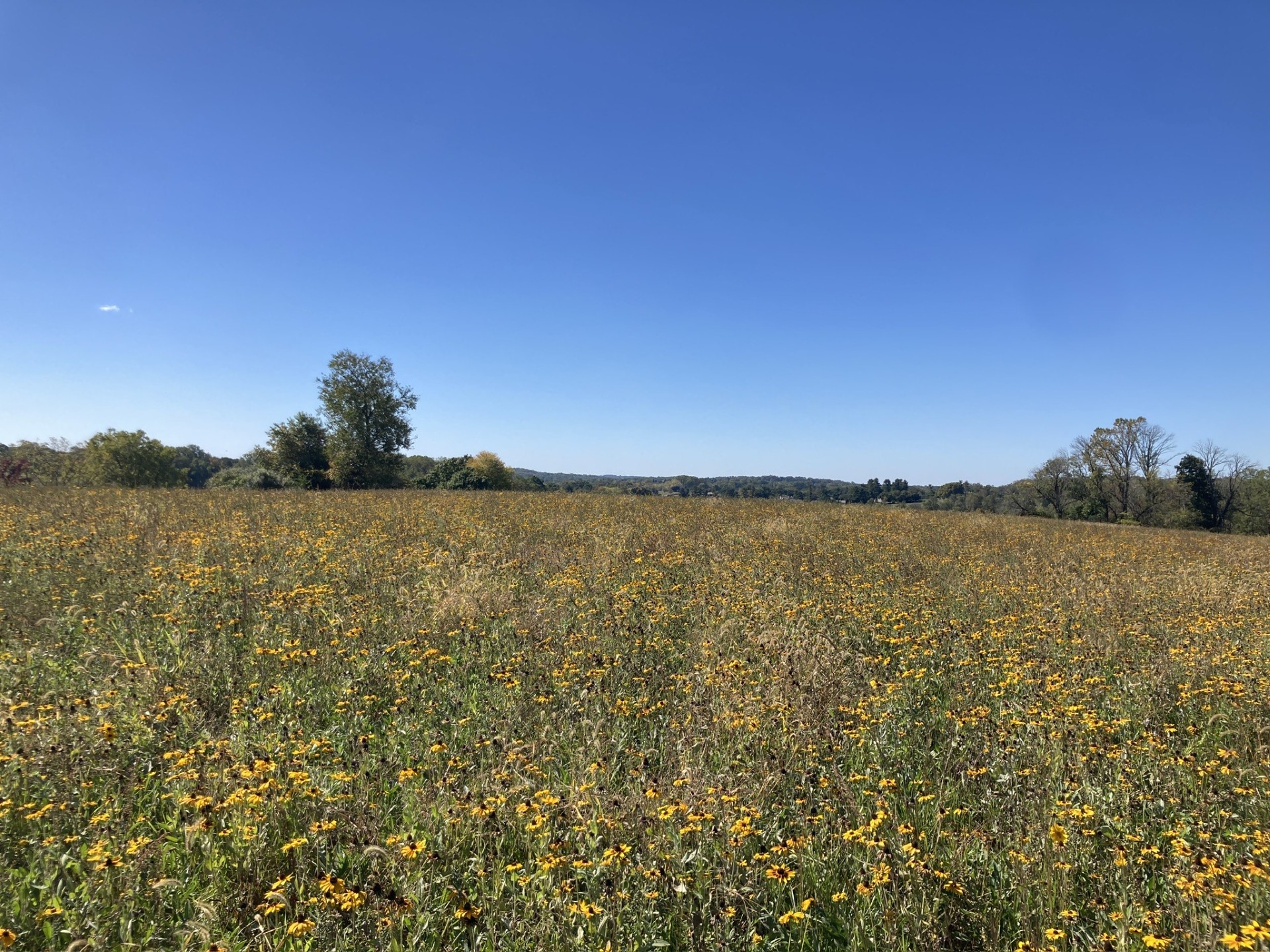
October 2024 | Season One: Early Growth

June 2025 | Season Two: In Bloom
Read More
COMING SOON: Kestrel Hill Preserve | October 30, 2023
OUR NEWEST PRESERVE- KESTREL HILL |
About Willistown Conservation Trust
Approximately 4,000 acres in the Trust’s focal area remain vulnerable to development. It is our highest priority to work toward permanent preservation of these remaining lands.
Land protection begins with a willing land owner who agrees to permanently protect their land from development, while retaining ownership of the land. With highly qualified staff and technical support from our partners in the community, the Trust identifies strategic properties, works with landowners, prepares proposals, and negotiates agreements to protect those lands. Once the land is protected by a conservation easement, the Trust is legally bound to monitor and enforce compliance with the agreement, in perpetuity.