

by John Schwartzer
The Chesapeake Bay has been in the news for its historic pollution load and our ongoing efforts to clean up the estuary. By restoring streamside forests and converting mowed lawns to native perennial meadows, Pennsylvanians are helping to naturally clean the water of sediment, nutrients, and other pollutants.
Once the water finds its way to the streams, the work continues by filter feeders like the 67 species of Pennsylvania native mussels. Pre-colonial mussel populations in the Susquehanna River were estimated in the billions. These “living livers” clean nutrients, small organic particles, and bacteria from 8 to 20 gallons of water per mussel, per day.
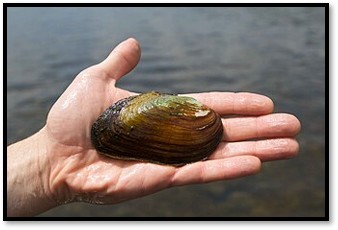
The most common mussel in the Chesapeake Bay, the Eastern Elliptio (Elliptio complanata). Westcott Phillip, U.S. Fish and Wildlife Service. Public domain
Mussels are bivalves along with clams and oysters. A bivalve is a long lived, two-shelled organism in the Mollusca phylum and Bivalvia class. Bi meaning two and valvae meaning “leaves or folding parts of a door”. In Pennsylvania’s rivers, lakes, and streams, the native bivalves are all mussels (no native clams).
Mussels are mostly sessile, meaning they do not move much but some burrow into sediment and help with substrate mixing. Some anchor to another object by web-like strings known as byssal threads. Some bivalve’s larvae (or glochidia) are parasitic, attaching to the gills of passing fish for protection, a fish taxi ride to new territory, and a blood meal before dropping off.
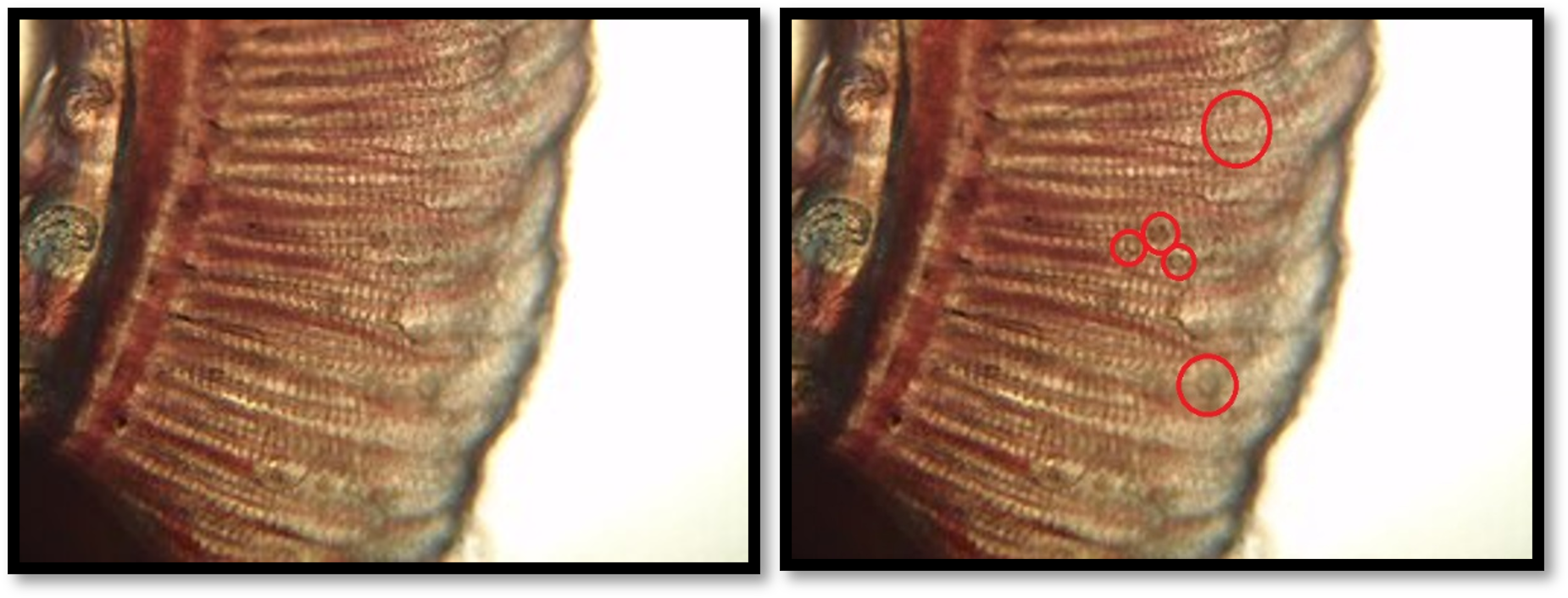
Glochidia attached to fish gill. Tony Brady, www.fws.gov/natchitoches/ public domain via Wikimedia.org
Ten mussel species in Pennsylvania are federally listed as threatened or endangered, from a variety of causes: sedimentation, historic overharvesting (for manufactured shell buttons), the loss of host fish, nutrient provoked algal blooms, or acid mine drainage.
Eleven PA mussels are already extinct.
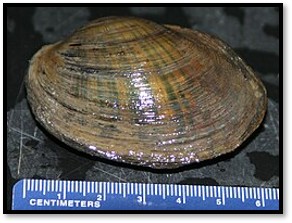
Eastern lampmussel (Lampsilis radiata) Dmccabe. CC BY-SA 3.0, via Wikimedia.org
These threats nationwide make the bivalves the most vulnerable class of organism in the country. Ninety-five species are listed on the US Endangered Species Act List. Fish passages around dams, like the one in Shikellamy State Park, dam removals, and American eel reintroduction efforts across the Commonwealth improve the chances of the mussels that rely on fish. It is illegal to take any bivalves from the waters of the Commonwealth.
While researchers are working hard to find ways to save our native mussels, there are non-native bivalves invading our waters. The Asian golden clam (Corbicula fluminea) is a freshwater clam from Southeast Asia that may have intentionally been imported or hitched a ride to western North America in seafood shipments in the 1930s.
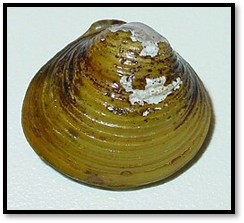
Invasive Asian golden clam (Corbicula fluminea) USGS. Public Domain
The clams took hold and spread rapidly. A single golden clam is self-fertile and can produce 400 offspring a day and up to 70,000 per year. They quickly spread via bait-buckets, the restaurant and pet trade, bilge water, and by sticking to aquatic flotsam with byssal threads during their larval stage. Golden clams do not require a fish host, and are mobile, using their muscular foot to dig through stream bottom substrates. They filter feed and can use their foot to scoop material up to their siphon tube called pedal feeding. Prevent their spread by cleaning and drying (for five days) boats, waders, and other recreation equipment between waterways and refrain from dumping aquarium pets or bait buckets in our waters.
More reading to “stretch” your mussel knowledge
Freshwater Mussels – Western Pennsylvania Conservancy
Service proposes protections for green floater mussel | U.S. Fish & Wildlife Service
Mussels | Fish and Boat Commission | Commonwealth of Pennsylvania
American Eels and Mussels: An essential relationship | Maryland Sea Grant
Freshwater Mussels | Science & Research | Partnership for the Delaware Estuary