

Article from Times of India World Desk published 28 August 2026
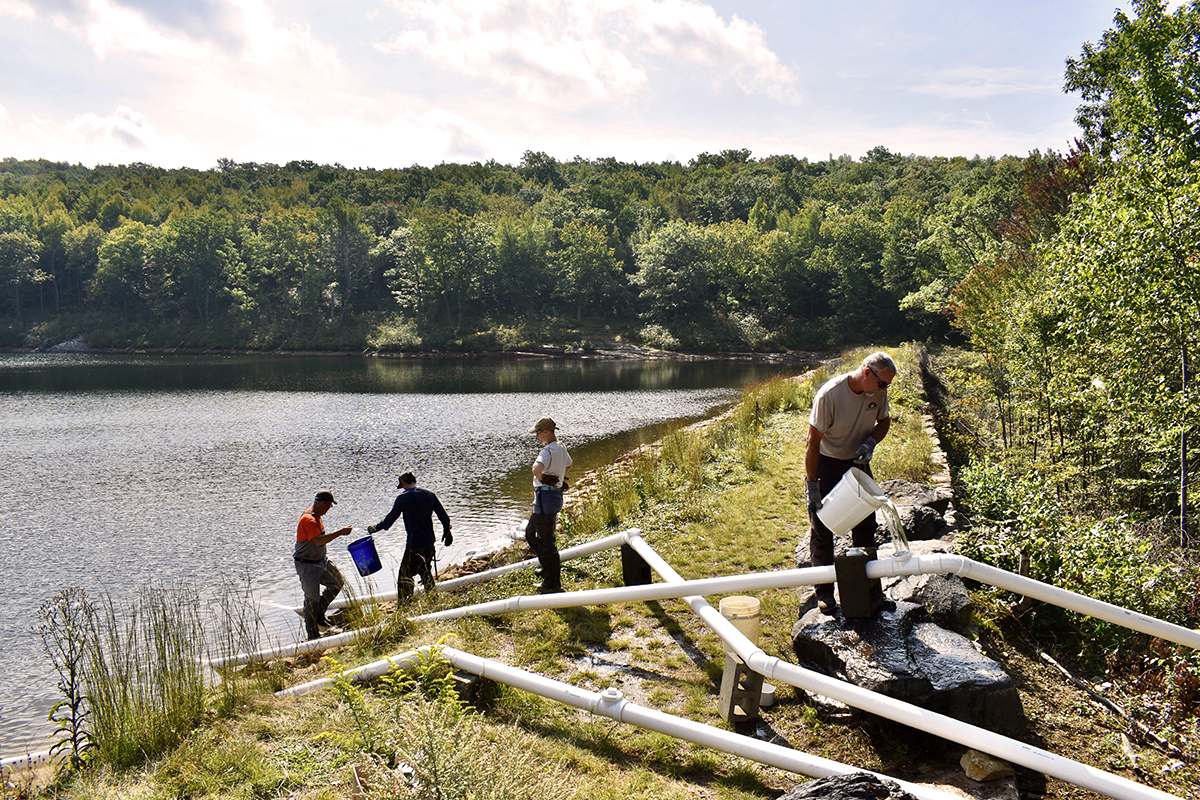
The restoration project, led by conservation group The Nature Conservancy (TNC), focused on the aging O’Conner Reservoir dam inside the Dick and Nancy Eales Preserve at Moosic Mountain. Built in the late nineteenth century, the dam had held back water across a six-acre reservoir for generations. But years of wear and storm damage had made the structure increasingly unsafe. Field teams began carefully lowering the reservoir’s water level before using pumps and specialist equipment to reduce pressure on the dam. In December 2021, crews excavated the main embankment. As the water drained away, researchers made an important discovery. The creek’s original natural shape, gravel beds and winding path were still preserved beneath the old lakebed. Because the original waterway remained intact, managers no longer needed to build an expensive artificial stream channel. Instead, they allowed Sterry Creek to return to its historic route across the mountain ridge.
Natural creek replaces artificial channel
The discovery changed the restoration plan. Stream restoration specialist Bill Weihbrecht worked with TNC stewardship directors on the project, making sure the reopened stream followed the natural shape of the valley.
Pat McElhenny, director of stewardship for The Nature Conservancy’s Pennsylvania chapter, led field operations to remove the middle section of the dam. Crews left parts of the original stone-lined spillway and outer dam walls in place to preserve some of the area’s history while allowing water to flow naturally again. “The dam itself was at risk of failure and the pH level of the water was no longer conducive to aquatic species,” documented the organisation in an official project review published by The Nature Conservancy. “TNC worked with local partners to perform a controlled demolition to lower the water level and allow the original stream to return to its original flow pattern. After the dam was breached and the reservoir drained, TNC’s freshwater team was delighted to see that the original stream channel, which spent more than 100 years at the bottom of a reservoir, was still intact.” Recent monitoring at the preserve has shown native plants returning across the drained lakebed. The area is also developing into a natural floodplain that can hold and slow seasonal floodwaters.
Restored floodplain improves water health
Before the dam was removed, the O’Conner Reservoir created slow-moving water with low oxygen levels, changed pH and higher temperatures. These conditions were harmful to native coldwater species. Draining the reservoir and reopening the old creek channel brought back faster natural water flow and cooler conditions needed by aquatic life. The former six-acre lakebed now works as a natural buffer during heavy rain. When storms cause Sterry Creek to rise, water can spread across the plant-covered floodplain instead of moving rapidly downstream towards populated areas. “The drained lakebed will now serve as a natural floodplain for Sterry Creek,” TNC said in a project update covering Appalachian river reconnection projects. During periods of high water, wetland plants help slow the flow, trap sediment and absorb some of the excess runoff. Reconnecting the upper sections of Sterry Creek has also linked previously separated stream habitats to the wider Lackawanna River watershed. This gives native fish, amphibians and aquatic invertebrates greater access to connected waterways.
Growing push to remove old dams
The return of Sterry Creek is part of a wider effort across the United States to remove old and unsafe dams. Environmental group American Rivers says hundreds of aging barriers have been removed from American waterways over the past decade to improve public safety and restore damaged rivers. Many old dams across the Appalachian region were built during the nineteenth century for mining, timber operations or early municipal water systems. After decades of limited or no use, many have become safety concerns, especially during extreme weather, while also blocking fish from moving through rivers. Pennsylvania state and federal agencies have increasingly supported removing old, unused dams instead of spending large amounts on repairs. The Sterry Creek project shows how removing an outdated structure can improve public safety while allowing a damaged ecosystem to begin recovering naturally. At the Dick and Nancy Eales Preserve at Moosic Mountain, the former reservoir is now becoming a recovering stream and wetland corridor. Monitoring will continue in the coming seasons as native plants strengthen the stream banks and help Sterry Creek remain in the natural channel that existed more than a century ago. What do you think of this change? Share your thoughts in comments section.
O’Conner Reservoir Dam
Removal to Restore an Original Stream
The O’Conner Reservoir dam has been regularly monitored by TNC and the State of Pennsylvania since TNC established Eales Preserve at Moosic Mountain in 2001. Signs of erosion and water moving through the dam were noted in 2020, requiring immediate short-term repairs and necessitating the lowering of water levels in the reservoir—a difficult and time-consuming task for our stewardship staff.
After three tropical storms passed through northeast Pennsylvania in the summer of 2021, it became apparent that the removal of the 128-year-old O’Conner Reservoir dam was necessary to address safety and liability issues. The breach of the O’Conner dam occurred in December 2021 and was authorized under emergency permit provisions.
When TNC acquires a parcel of land, we commit—both legally and ethically—to steward that land in perpetuity. TNC often acquires land that includes legacy infrastructure like homes, barns, bridges or dams. For TNC preserves that are open for recreation, public safety is the top stewardship priority.
With the design, permitting and construction phases of the project completed this past winter, our freshwater conservation team has now turned its attention to restoration. The dam removal has created an opportunity to restore the original stream channel and floodplain at the bottom of the reservoir, which will create a more natural headwater habitat for Sterry Creek.
The stream channel is being allowed to form naturally through the previous reservoir area while the stream section running through the dam breach is designed to accommodate higher streamflows. The rock and soil material removed from the breach was placed on the upstream and downstream sides of the remaining intact sections of dam.
Visitors will be able to see the juxtaposition of our past and our future, as portions of the dam—including the stoned-lined spillway—remain intact, and pieces of the timber crib encountered during construction are on display, allowing for historical interpretation of the original dam and its construction.
Ecological benefits will continue to increase over time, as native vegetation becomes re-established in the former reservoir area; improvements in riverine, wetland and riparian habitats occur; and the movement of species between headwater and downstream reaches are restored.
Over the coming months, TNC will evaluate the necessity of further restoration efforts that enhance the ecological communities, wildlife and recreational assets of the preserve.