

by Ryan Reed
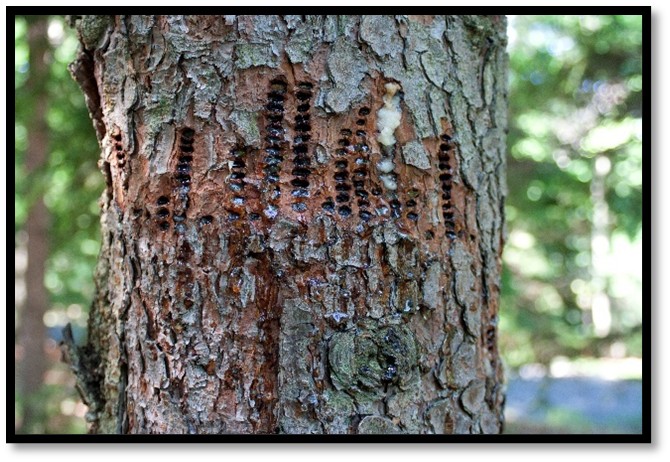
Have you ever seen a tree with neatly arranged holes in the bark? If you have, you were looking at the handywork of the yellow-bellied sapsucker (YBS).
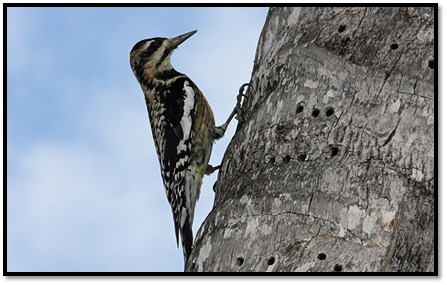
One of many migratory birds of PA, the YBS is an interesting character in the woodpecker family. A relatively small woodpecker coming in at seven to eight inches long, the YBS has a distinctive black head with a red crown and matching throat (females lack this field mark).
The YBS’s hole drilling tendency is a feeding strategy that enables the bird to consume nutrient-rich sap (as its common name implies) but also serves as an ingenious way of luring protein-packed bugs that become trapped in the sap in the days after drilling activity. Much to the chagrin of the tree care pro, the YBS is said to be able to drill up to about 30 holes a day. The hole damage is generally not a big problem for the health of the tree but can become one if the tree is stressed from other factors.
The YBS prefers northern hardwood and mixed coniferous forests and can be found more plentifully in the Commonwealth’s northern tier. It is pleasantly surprising that the species has reportedly increased in recent decades in PA by over 60 percent according to the PA Game Commission (PGC). The PGC also reports that the YBS is the most common woodpecker nesting across much of the state’s northern forest.
The next time you see a series of geometrically arranged dots on a tree, remember the “hole” story of the YBS.