

by Chris Firestone
Change. It touches all parts of our work and personal lives. At work we say goodbye and hello to colleagues on a regular basis as they are hired, leave for another job, or retire. A longtime colleague who has announced his retirement for June 2026 is ecologist Greg Podniesinski. He is the Section Chief (and Director) for the Natural Heritage Program in the Conservation Science and Ecological Resources (CSER) Division.
Greg joined the Natural Heritage Program in 1998 as a plant community ecologist working on several vegetation mapping and plant community classification projects. He then became the Natural Heritage Program Director for The Nature Conservancy and later was named Science Director for the Natural Heritage Program at the Western Pennsylvania Conservancy. Greg began his career at DCNR in 2008.
Greg’s early interest in how organisms work together and his fascination with the complexity of the natural world led to degrees in biology at Notre Dame (B.S.) , then grad school at the University of Maine (M.S.) in marine invertebrate zoology, and SUNY ESF (Ph.D.) in plant ecology.
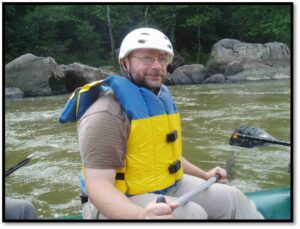
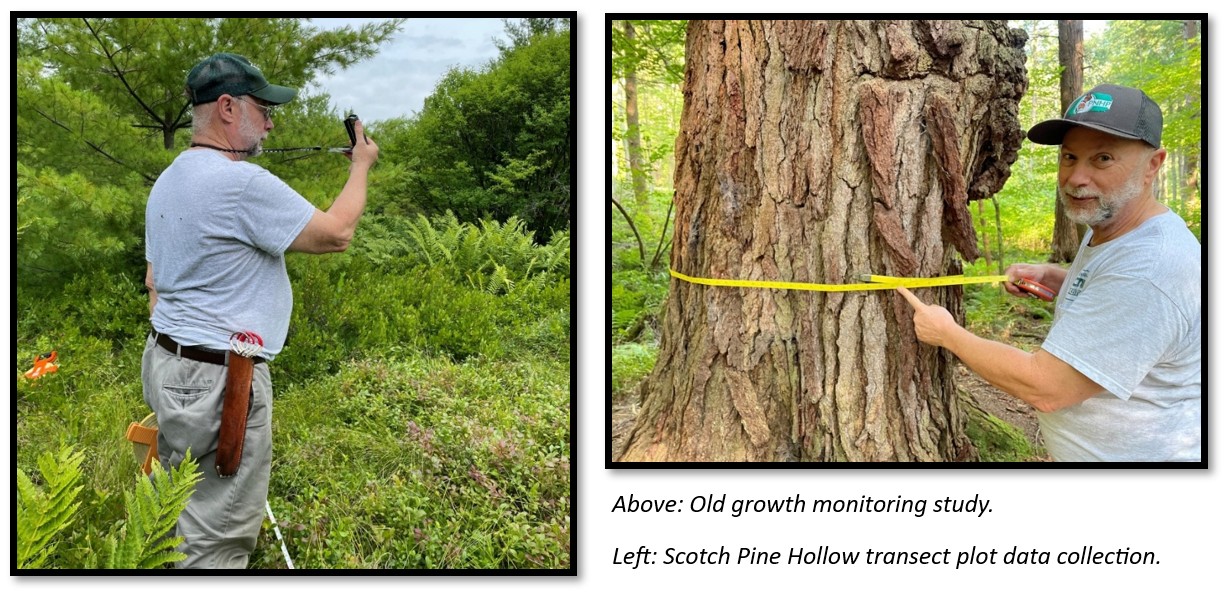
Field work wasn’t always in a field or woods.
As an ecologist, field work occurred in many different habitats all over the state and generated memorable stories involving long days of hiking to study sites and getting back to the vehicles with the aid of phone flashlights, and encounters with momma bears and rattlesnakes. Multi-tasking in the field by answering urgent phone calls from the office while collecting field data was not unheard of for Greg.
His CSER colleagues describe him as “the elder statesman of PNHP (Pennsylvania Natural Heritage Program)”, “a wonderful supervisor who manages the tedious balance of giving agency and independence with my program but also being invested and involved”, and “possessing a proclivity towards comedic sarcasm but really considerate and serious when it matters, prioritizing team building such as hiring a conservation mycologist who is one of the first of her kind in North America.”
Greg’s advice to his successor stresses the importance of getting to know all staff and remaining patient and calm to the greatest extent possible. He said there is not much routine to the workdays, so “don’t let things sit.” For those just starting out in the Bureau, Greg’s advice is to be curious and willing to learn and broaden your knowledge about vernal pools, stream crossings, plant, invertebrate, and fungi conservation, and forest management.
Retirement plans for Greg include travel, more time gardening, learning plant propagation, volunteering at Longwood Gardens, and maybe field work for PNHP. Plant conservation is a lifetime love for Greg as he plans to continue in retirement. We wish him well, and when in the field, he gets back to the car safely (with or without flashlights)!