
News article written by Charles Stangor for Gettysburg Connection posted on 6 November 2025
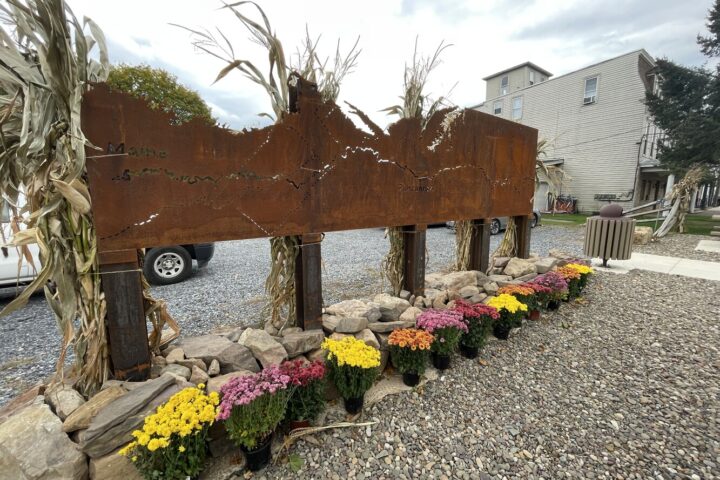
One hundred years ago, a visionary idea took shape that would change the way Americans experience their own landscape. In 1925, volunteers and conservationists came together to form what would become the Appalachian Trail Conservancy, launching an effort to build and protect a continuous footpath through the Appalachian Mountains. A century later, the Appalachian Trail (A.T.) stretches more than 2,190 miles from Georgia to Maine—one of the nation’s most beloved outdoor landmarks and a living symbol of endurance, community, and connection with the natural world.
The idea for the trail began with Benton MacKaye, a forester, planner, and thinker who in 1921 published “An Appalachian Trail: A Project in Regional Planning.” He proposed a wilderness footpath linking forests, farms, and camps along the mountain chain—a place for recreation, reflection, and renewal in a rapidly industrializing nation.

By 1925, inspired volunteers and outdoor clubs took up his vision, forming the Appalachian Trail Conference (now the Conservancy) to coordinate their work. That founding marks this year’s 100th anniversary of the organization that still manages and protects the trail. By 1937, the full route was connected—though rugged and primitive in many stretches—and the dream of a trail “for those who seek fellowship with the wilderness” became reality.
The trail soon became more than a line on a map. During the postwar years, outdoor recreation flourished, and the A.T. became a national symbol of simplicity and self-reliance. Hikers such as Earl Shaffer, a World War II veteran from York, Pennsylvania, helped elevate its legend. In 1948, Shaffer became the first person to walk the entire trail in one continuous journey, saying he wanted to “walk the Army out of [his] system.” His pioneering trek began and ended in Pennsylvania, inspiring generations of thru-hikers to follow.
The Trail Through Pennsylvania
Pennsylvania is home to about 229 miles of the Appalachian Trail—roughly ten percent of its total length—making it one of the longest trail segments in any state. The route enters the Commonwealth at the Susquehanna River near Duncannon and runs northeast across the ridges of the Blue Mountain chain before exiting into New Jersey at the Delaware Water Gap.
The Pennsylvania section is known for its rugged, rocky terrain, earning it the nickname “Rocksylvania.” Yet its ridgelines, forests, and vistas draw countless hikers each year. Trail towns such as Boiling Springs, Pine Grove Furnace, Port Clinton, and Delaware Water Gap serve as vital waypoints, blending natural beauty with small-town hospitality.
At the heart of the Pennsylvania stretch lies Pine Grove Furnace State Park in Cumberland County, the official halfway point of the Appalachian Trail. Just 25 miles north of Gettysburg, the park sits within Michaux State Forest and offers an easy, scenic drive for local hikers and visitors. Here, hikers mark their progress with photos beside the wooden halfway sign and, in keeping with tradition, attempt the “Half-Gallon Challenge” by eating a full half-gallon of ice cream at the Pine Grove Furnace General Store. The nearby Appalachian Trail Museum, housed in a 200-year-old grist mill, chronicles the trail’s creation and the thousands who have hiked its length.
The Mid-Atlantic Appalachian Trail Conservancy office sits just up the trail in Boiling Springs, where the A.T. passes through the center of town and along Children’s Lake. Each summer, thousands of hikers stop there for supplies, advice, and encouragement on their north- or southbound journeys.
A Living Legacy
Congress recognized the trail’s national significance in 1968, designating it as the first National Scenic Trail. Today, the A.T. is maintained almost entirely by volunteers—an estimated 6,000 each year—working alongside the National Park Service and U.S. Forest Service to preserve its wild beauty.
As the Appalachian Trail Conservancy celebrates its centennial in 2025, events and hikes have occurred along the entire route—including many in Pennsylvania—to honor the visionaries, workers, and dreamers who built and cared for this iconic path. For those who walk even a few steps of it, the A.T. offers more than just a hike—it’s a century-long invitation to connect with the land, with history, and with one another.