


Terror-ific Webs
By Jason Ryndock
When Charlotte’s web was proclaimed a miracle, the arachnid architect was largely overlooked. But the real miracle was not the words written in her web. It was the radiant web itself…and its builder.
The web of the humble barn spider (Araneus cavaticus) begins with a strand of silk released into the air. After much spinning, measuring, and cutting, the familiar orb web takes shape, composed of framed radii supporting a sticky spiral around a central hub. The entire process uses about 20 meters of silk, takes less than an hour, and is guided only by her sense of touch without any visual feedback. That is some spider.
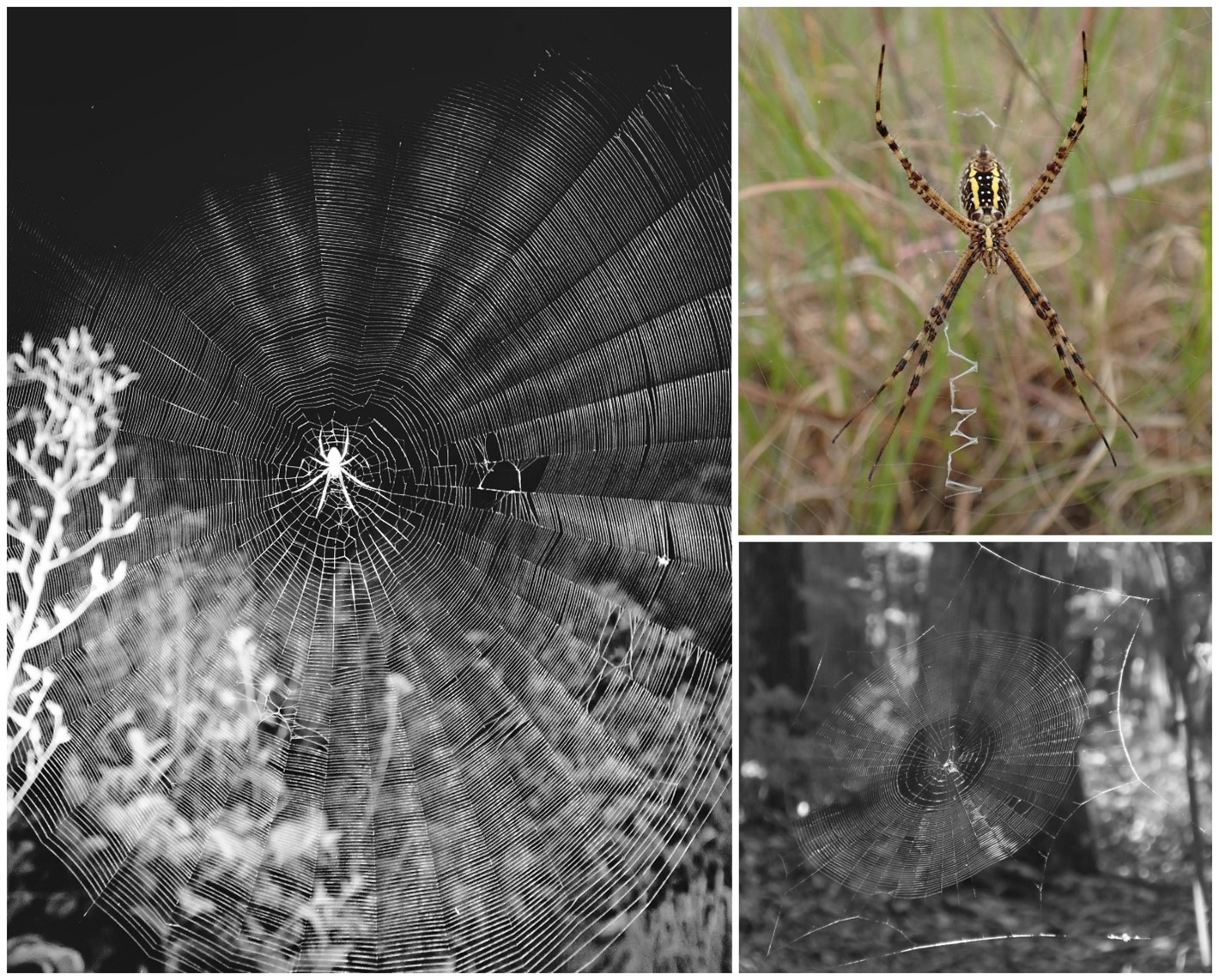
Left: Acacesia hamata builds a fantastic orb web every evening, taking it down before sunrise in under 60 seconds; Top Right: The function of the white zigzag stabilimentum in this Argiope trifasciata web remains unknown; Bottom Right: Webs of Micrathena gracilis are built to intercept high impact prey like flies, although they have caught many a hiker.
All spiders produce silk, but not all spiders build snares for catching prey. Spider silk is wonderfully strong and elastic. Liquid silk in spinning glands turns to solid thread as it leaves the spigots on highly mobile spinnerets at the spider’s rear. Different glands produce different types of silk or substances with various applications, including draglines, snares, sticky glue, swathing, ballooning, and cocoons.
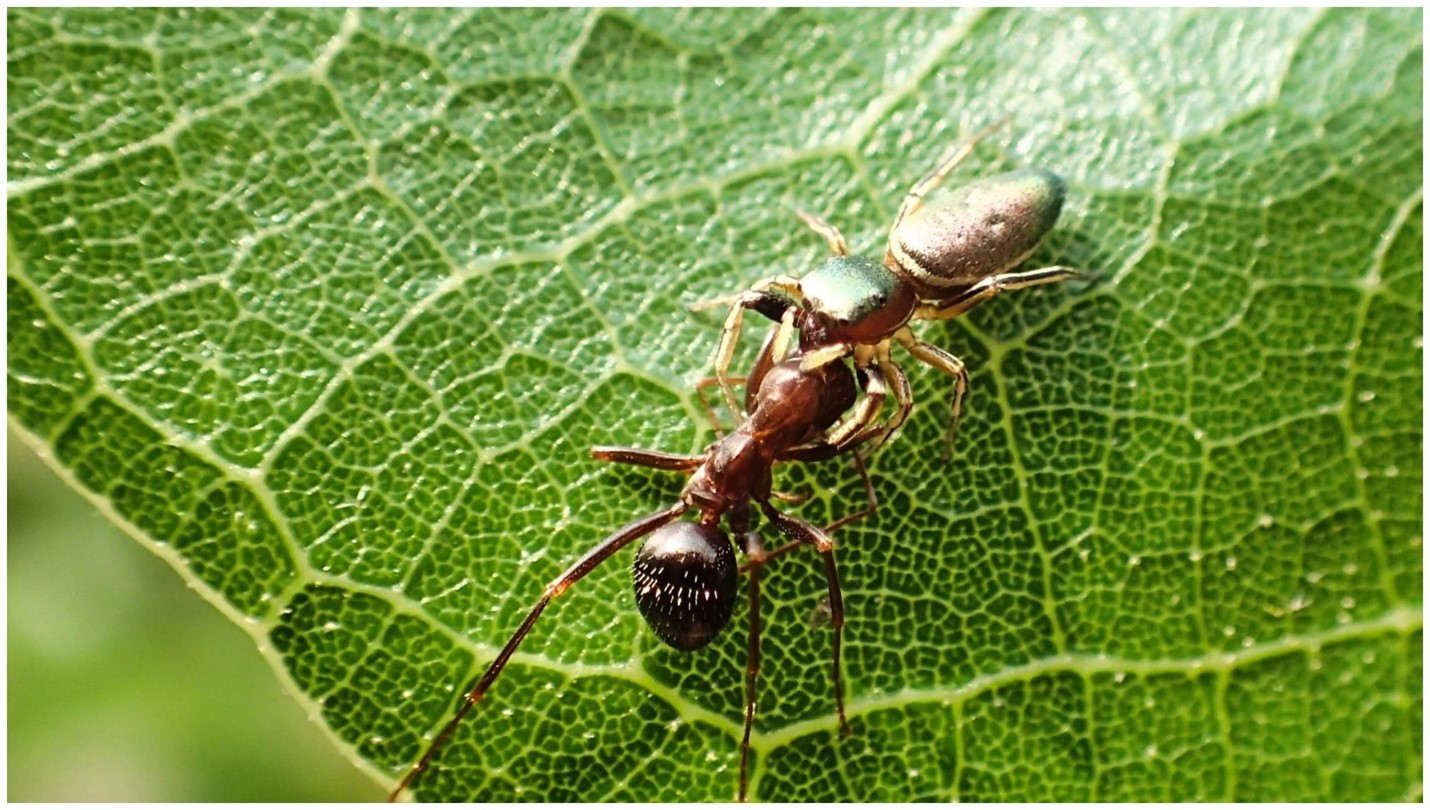
Above: The jumping spider Tutelina elegans has no use for webs but does appreciate safety draglines.
Web designs are as diverse as their architects but tend to follow a few basic models. Radial webs are simple tubular retreats with tripwire or catching threads radiating from the entrance. Orb webs are intricate snares that greatly extend a spider’s sensorium, transmitting the vibrations of struggling prey or the courtship rituals of potential mates, while also providing quick access or escape routes. Orb webs can even function as giant eardrums, allowing orbweavers to anticipate approaching predators and prey.
The orb design has a high capture efficiency; however, some species have made modifications. For example, the small sticky sweep net that ogrefaced spiders (Deinopis) throw over their prey is derived from an orb web. These spiders belong to a phylogenetically old group. Rather than use wet glue, they comb dry “catching wool” from a cribellum (a plate with numerous tiny spigots) to ensnare prey.
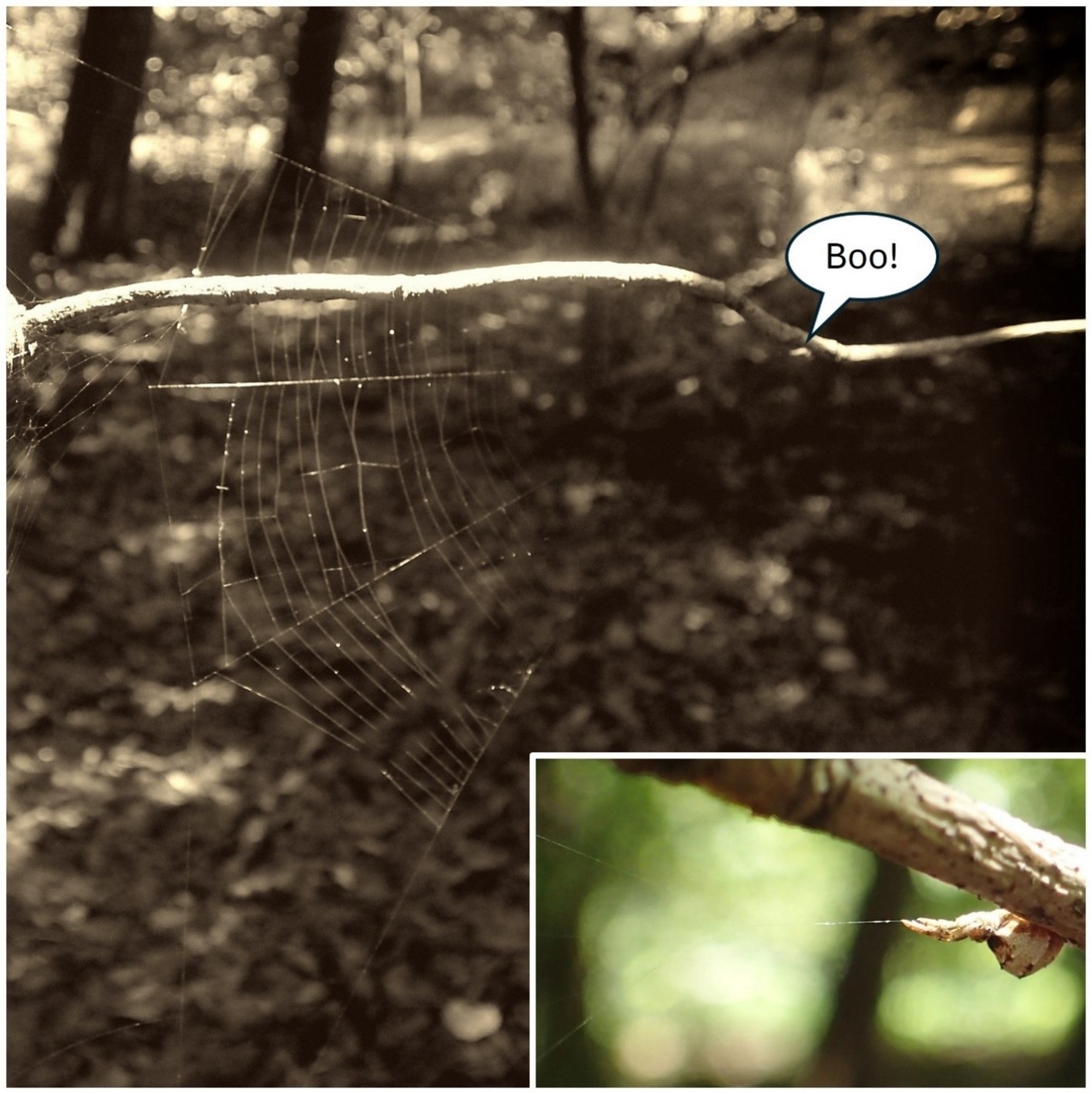
Above: The body of Hyptiotes cavatas forms a living bridge in its spring trap, consisting of only three sectors of an orb web. When prey strikes, the spider releases the tension, collapsing the web and trapping the victim. The web can be used repeatedly and often shows damage.
Sheet webs of linyphiids knock down flying insects with a vertical mass of threads. The spider, hanging beneath a sheet, shakes down the prey and pulls it through the sheet after a fatal bite. Funnel weavers, on the other hand, dash out from tubular hideaways to seize prey hobbled by their treacherous sheet traps. Frame webs (also called mesh, tangle, or cobwebs) appear rather disorganized. Some have trap threads studded with glue droplets. When an insect blunders into one, the thread breaks, suspending it helplessly in the air.
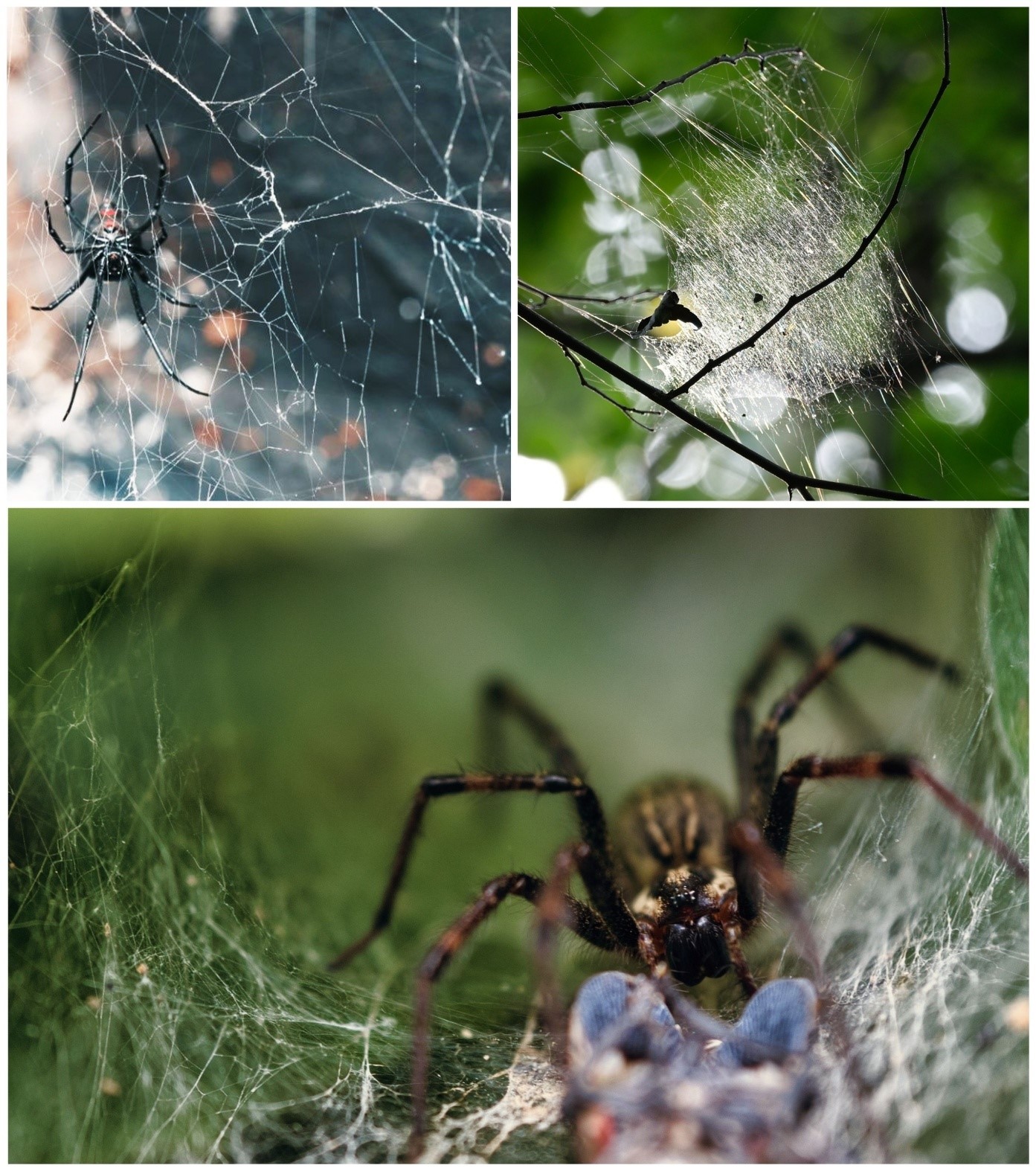
Top Left: The frame web of this Latrodectus variolus was a significant hazard for carpenter ants; Top Right: Sheet webs of the linyphiid Frontinella pyramitela are built in sections over several days and are long-lasting; Bottom: Spotted lanternflies can’t escape the sheet webs of the funnel weaver Agelenopsis naevia.
Maybe don’t dress up as an insect this year. HAPPY HALLOWEEN!