

by John Schwartzer
This article started out about chokecherries (Prunus virginiana) and how chokecherry is a common ingredient in indigenous pemmican, or fruit leather. While researching this topic, my focus became distracted by the Prunus genus’s hairy leaves. Small rows of “hairs”, botanically known as trichomes, exist in the area surrounding the vein on the undersides of most cherry species’ leaves. Forestry students are taught that black cherry’s (Prunus serotina) trichomes are a fairly reliable distinguishing characteristic when deciding between cherry and a black birch (Betula lenta). Pennsylvania’s oaks (Quercus species), maples (Acer species), and hickories (Carya species) all have tufts of trichomes.
But why do some trees have so much hair in their crevices?
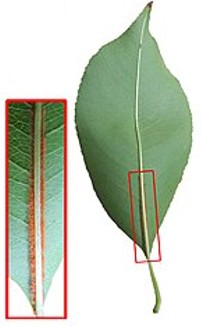
Trichomes on black cherry (Prunus serotina). Gmihail at Serbian Wikipedia, CC BY-SA 3.0 RS, via Wikimedia Commons
The purpose has more to do with defense against foreign attackers than keeping the leaves slightly warm -or cool. These fuzzy spots are also known as domatia, or domatium for singular, coming from the Latin for home. They serve as barracks for an army of predatory mites. Mites defend the tree from damage by herbivorous mites and small insects. Other mites that guard the trees consume fungus, preventing or reducing fungal attacks. In a great example of mutualism, the plant provides a cozy place for the mites to live and lay eggs. When mites are the intended tenants, they are called acarodomatia.
More than 80 percent of woody species in North America create some form of domatia. Acarodomatia presence increases the farther traveled from the equator, so temperate forests like Penn’s Woods are full of domatia.
Woody plants use a variety of domatia strategies. On leaves, they can be pits, trichome tufts, even pockets or pouches called ‘marsupiform’ domatia -like a kangaroo pouch. Black walnut (Juglans nigra) has trichomes and sometimes pits.

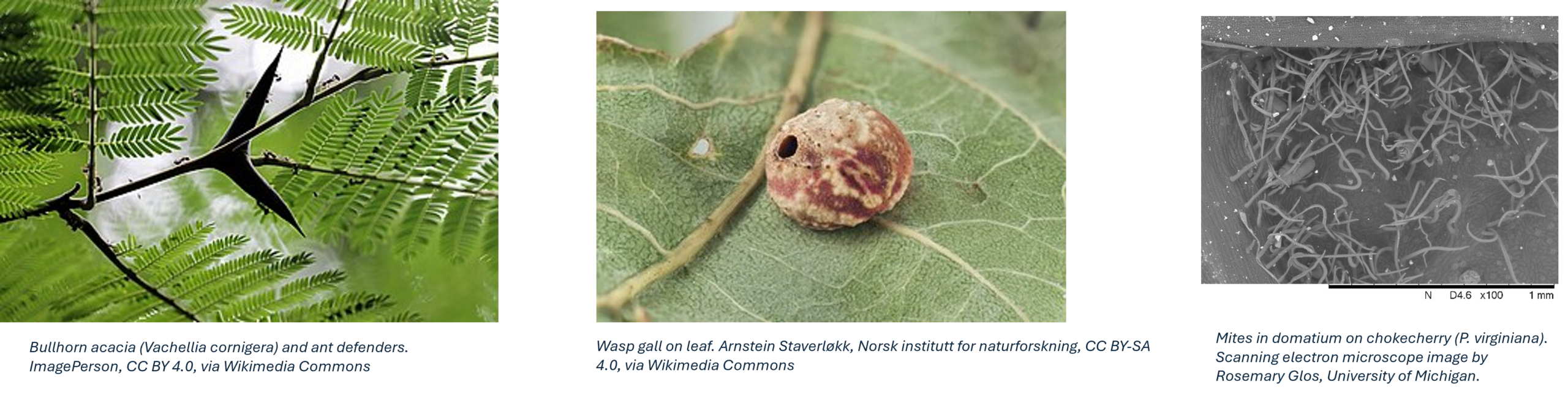
Mites aren’t the only critters to be found in a domatium. Some tropical plant species form larger domatia to house ants. These plants produce hollow stems, swollen leaf structures, or immensely oversized thorns to house ant colonies. Sometimes the ants must chew their own door to gain entry.
The ants serve the same function: swarming, biting, and stinging herbivore attackers on the trees. Ant houses are called myrmecodomatia. The nearest ant motels can be found in central Mexico.
Domatia can occur on roots, stems, flowers, and leaves. Because the plants create domatia in the absence of mites or ants, these are not galls. Galls form because of hormonal changes caused by an insect or mite feeding or egg-laying.
These mutualistic relationships are fascinating examples of how our trees defend against threats. Next time you’re munching on some pemmican sitting in the shade of a tree, flip a leaf over to see if you can find some domatia and thank the mites for their hard work.