

by Ryan Reed
Growing up I spent many summer afternoons and evenings watching the Pittsburgh Pirates play on tv at Three Rivers Stadium, their home ballpark at the time. Back then, I didn’t realize the reason for the name was the confluence between the Allegheny and Monongahela rivers, forming the third– the Ohio.
Another river of my youth, the Susquehanna, was much closer to home. Occasionally we’d jump in the truck and head down to “Red Hill” to chase bass and catfish. Fertile farmland throughout the region stocked a roadside produce stand that still operates today.
Another major river that drains the third-most watershed acres in Pennsylvania is the Delaware, which essentially forms our eastern boundary with New Jersey. Originating in the Catskill Mountains of New York, it eventually becomes an estuary as it mixes with tidal waters.
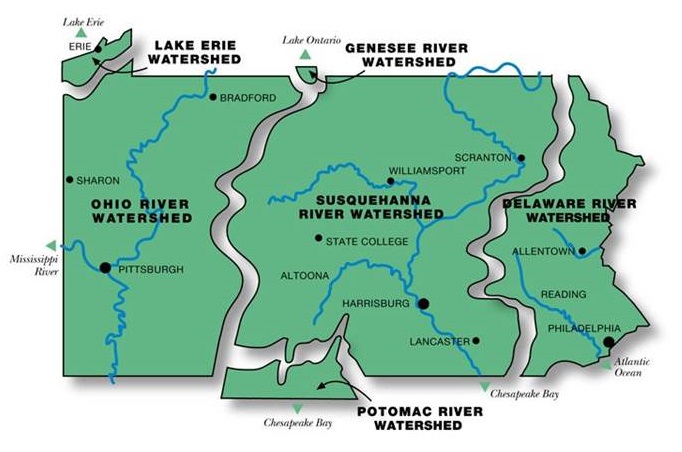
Pensnylvania’a Major Watersheds
All three rivers (Ohio, Susquehanna, and Delaware) together drain roughly 93 percent of Pennsylvania.
Our state forest lands (2.2 million acres) help to provide vast quantities of clean water that ultimately flow into these rivers. You might have heard that the Chesapeake Bay’s health has been steadily improving, and this is no doubt related to the efforts of the bureau and many other partners to reforest streamside (riparian) areas and improve other water quality impacts. Although similarly challenged, both the Ohio and Delaware rivers have improved in some respects, as well.
Water quality improvements and associated effects like cleaner drinking water, improved fisheries, and healthier ecosystems in general are all positive developments resulting from coordinated teamwork, funding, and political will.
One could make the argument that the health of our rivers is a commentary on our collective environmental ethic as a society, and I’m glad to see some progress. There is no disputing the cascade of good fortune that follows when we put forth the work it takes to prevent pollution and restore degraded lands. If the last few decades have shown some small but significant steps for our rivers, I’m optimistic the next few decades will be even better. You can be assured that the quality of our water and health of our rivers will always be a priority for the DCNR Bureau of Forestry.
Please use the links below to learn more about our water quality and rivers conservation work.
Water Conservation Page | DCNR DCNR Watershed Specialists Map
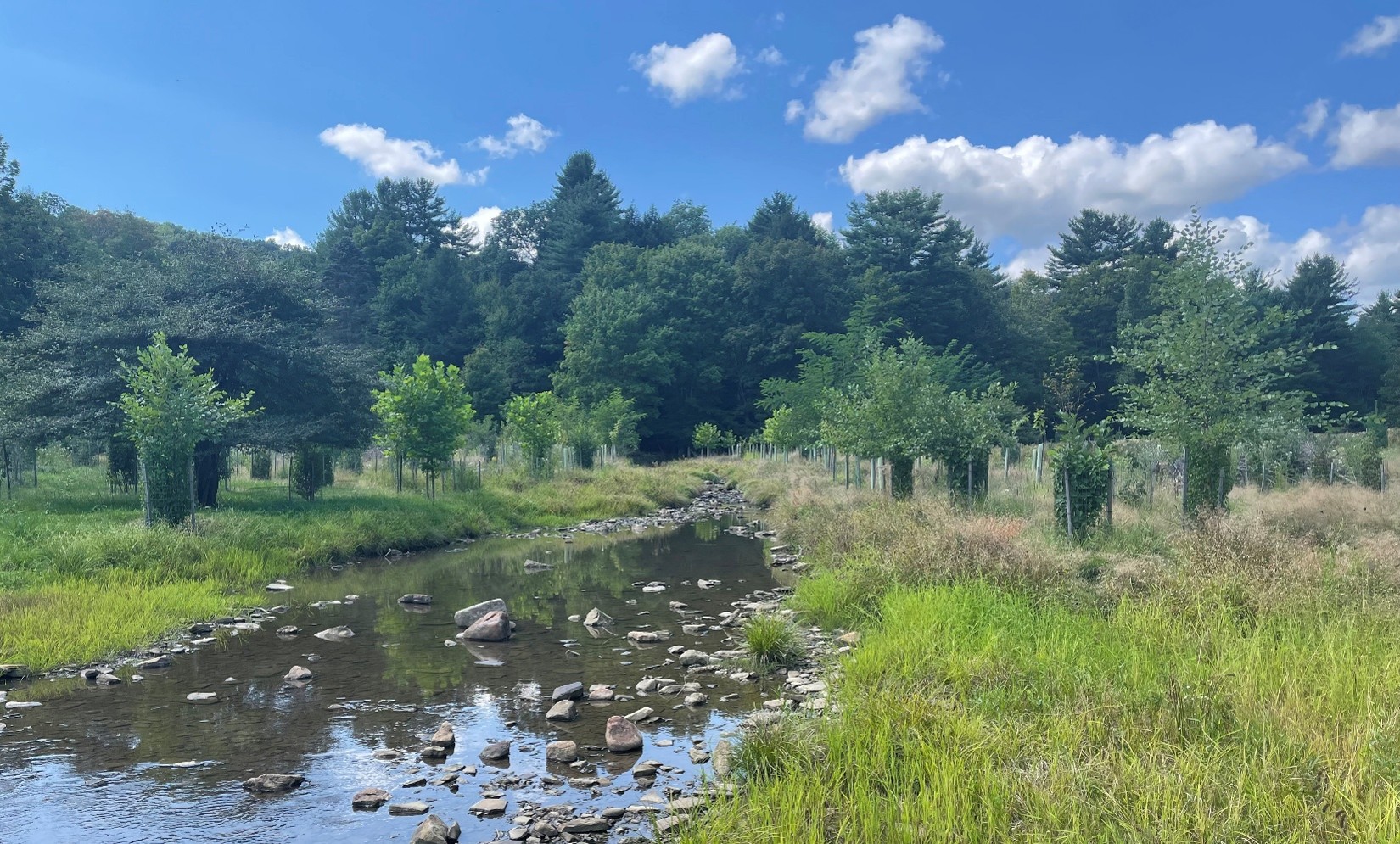
This riparian planting in Warren County is improving a tributary of the Ohio River. (photo by T. Chamberlin)